
One Way Private Jet by Aircraft
Match the aircraft to your trip before you request quotes. Hourly rates run from $2,200 to $14,500 across the fleet. This guide covers each class so you can compare offers.
- Home
- Jet types
A one way private jet by aircraft is priced differently from a round trip because you charter only the leg you need. Operators quote the flight time, the aircraft category and the airport pair, and our broker role is to collect those quotes and lay them side by side. You see the turboprops and light jets first when the route suits them, then the larger cabins as distance grows. The aircraft you pick determines the runway it can use, the baggage it carries and the density altitude it can climb from on a hot day.
The fleet below covers ten models from the Beechcraft King Air 350i to the Dassault Falcon 900LX, grouped by class. Each entry lists passengers, cruise speed, range, cabin dimensions and baggage space from the manufacturer data we hold. When you match the aircraft to the trip rather than the other way around, you avoid paying for a heavy jet on a short hop from Teterboro to Boston. The notes under each class explain where that category tends to earn its keep.
Turboprop
Turboprops pair piston-like runway manners with cabin comfort, and hourly rates of $2,200 to $3,500 make them the value pick on shorter legs. The King Air and PC-12 handle 1,500 to 1,800 nautical miles at 300 knots, so a hop like Los Angeles to San Francisco fits neatly. They also reach smaller fields where runway length rules out jets, which matters when your destination is a regional airport rather than a major hub.
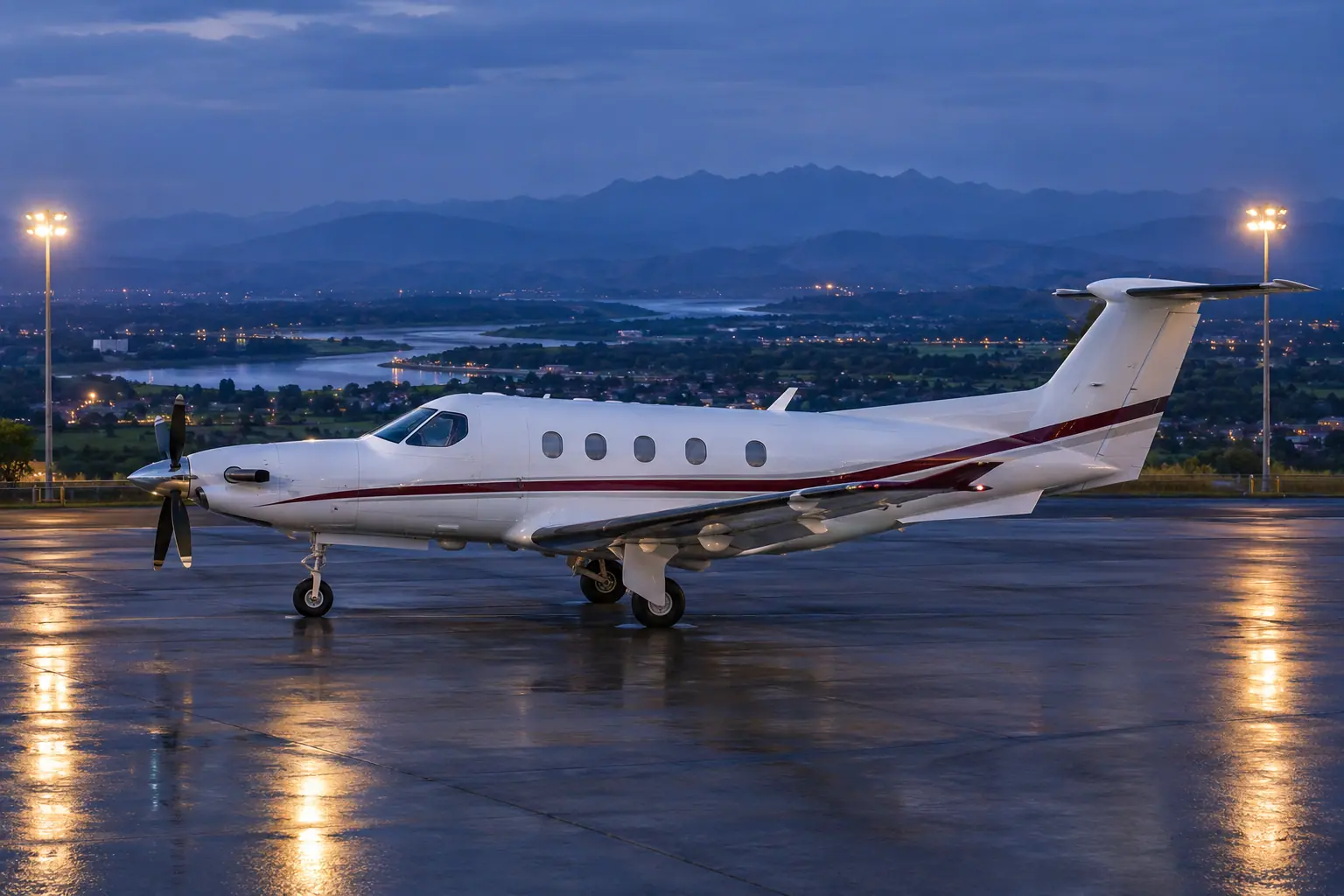
Pilatus PC-12 NGX
- 6 seats
- 290 kt cruise
- 1,800 nm reach
The Pilatus PC-12 NGX carries six passengers at 290 knots over 1,800 nautical miles. A single-engine turboprop with 40 cubic feet of baggage, it suits smaller fields and shorter trips where cabin size is secondary. The cabin is 4 feet 10 inches tall and 16 feet 11 inches long.
Daher TBM 960
- 6 seats
- 330 kt cruise
- 1,730 nm reach
Light jet
Light jets cover four to seven passengers at $3,800 to $5,800 per hour, with cruise speeds around 430 knots. A Citation CJ4 or HondaJet suits a 1,400 to 2,165 nautical mile trip where a turboprop would feel slow and a midsize would be more cabin than you need. Their shorter cabins still carry real baggage, and they typically use the same executive airports as larger jets.
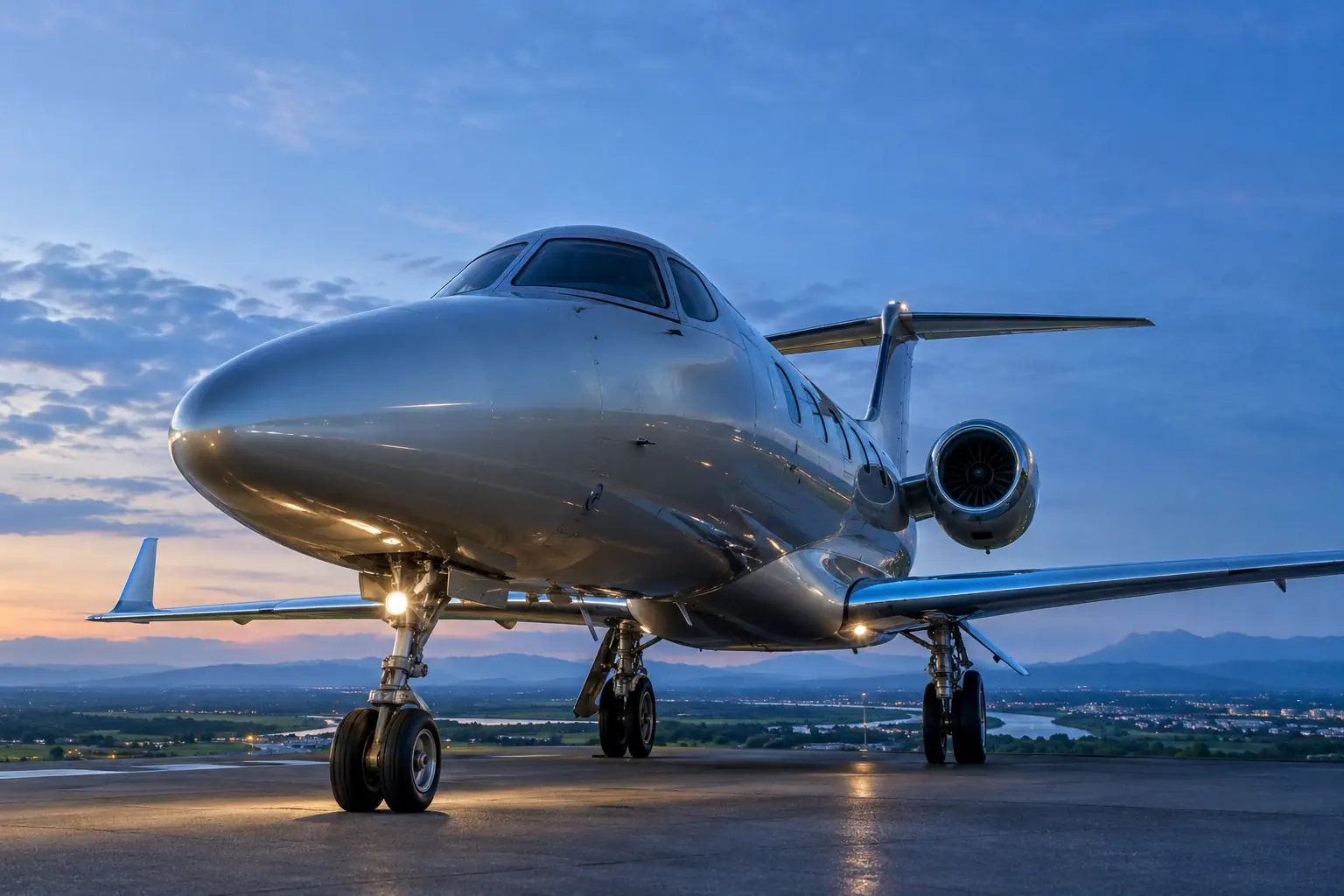
Embraer Phenom 300E
- 7 seats
- 464 kt cruise
- 2,010 nm reach
Pilatus PC-24
- 8 seats
- 440 kt cruise
- 2,000 nm reach
Midsize jet
Midsize jets carry seven to nine passengers at $5,200 to $7,800 per hour and add stand-up headroom that light jets lack. The Hawker 800XP and Citation XLS+ fly 2,100 to 2,540 nautical miles, which covers New York to Miami or Chicago to Miami without a fuel stop. For a family or a small team, the extra cabin length and baggage volume often decide the choice over a light jet.
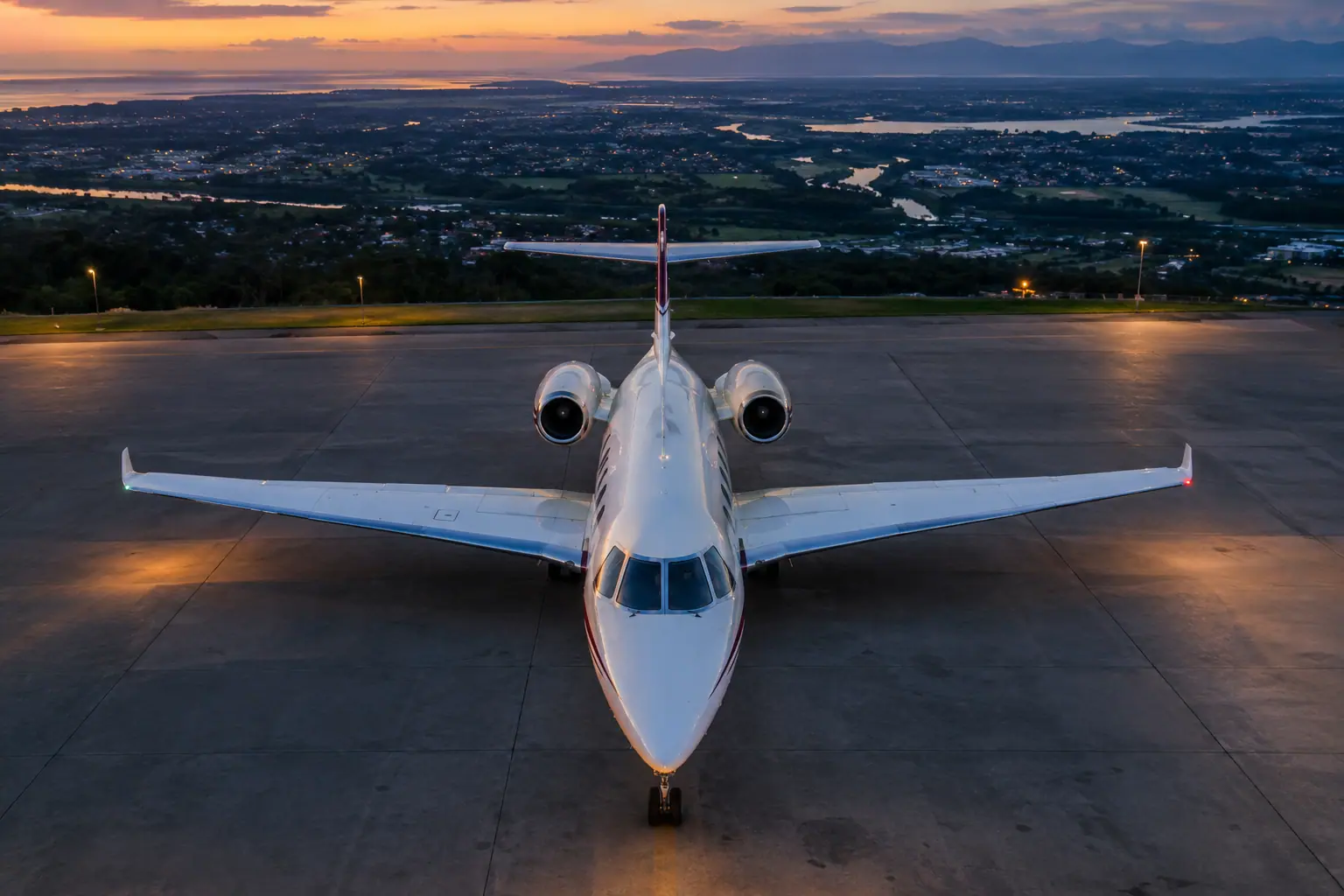
Cessna Citation XLS+
- 8 seats
- 441 kt cruise
- 2,100 nm reach
The Cessna Citation XLS+ carries eight at 441 knots over 2,100 nautical miles. With 90 cubic feet of baggage, it absorbs skis, golf clubs or trade-show material that strains a light jet. The cabin measures 5 feet 8 inches tall and 18 feet 6 inches long.
Cessna Citation Latitude
- 9 seats
- 446 kt cruise
- 2,700 nm reach
Super-midsize jet
Super-midsize aircraft stretch range to 3,200 to 3,600 nautical miles at $7,200 to $10,000 per hour while keeping runway needs reasonable. The Gulfstream G280 and Citation X+ handle transcontinental legs like New York to Los Angeles with a cabin height over six feet. They are the usual answer when the trip is long but the passenger count stays under ten.
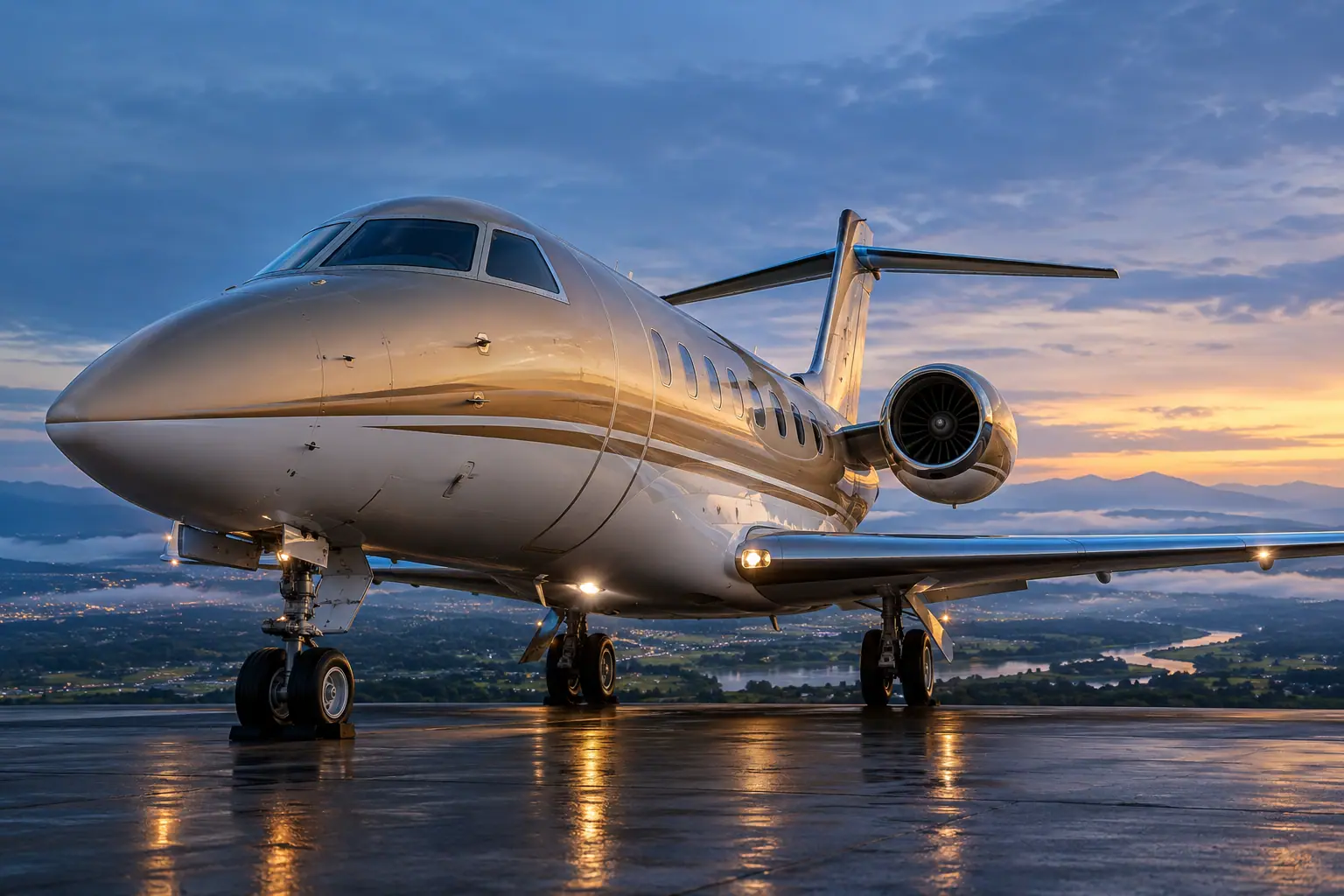
Cessna Citation X+
- 9 seats
- 527 kt cruise
- 3,460 nm reach
The Cessna Citation X+ flies nine passengers at 527 knots over 3,460 nautical miles. That cruise speed shortens long legs, and 82 cubic feet of baggage keeps the cabin uncluttered. The cabin is 5 feet 8 inches tall and 25 feet 2 inches long.
Bombardier Challenger 350
- 10 seats
- 470 kt cruise
- 3,200 nm reach
Heavy jet
Heavy jets carry ten to fourteen passengers at $9,500 to $14,500 per hour with cabins over six feet tall and 28 feet or more in length. The Challenger 650 and Falcon 900LX reach 4,000 to 4,750 nautical miles, so international legs and coast-to-coast trips with a full cabin fit their design. Baggage volumes above 100 cubic feet matter when the group travels with gear or golf bags.
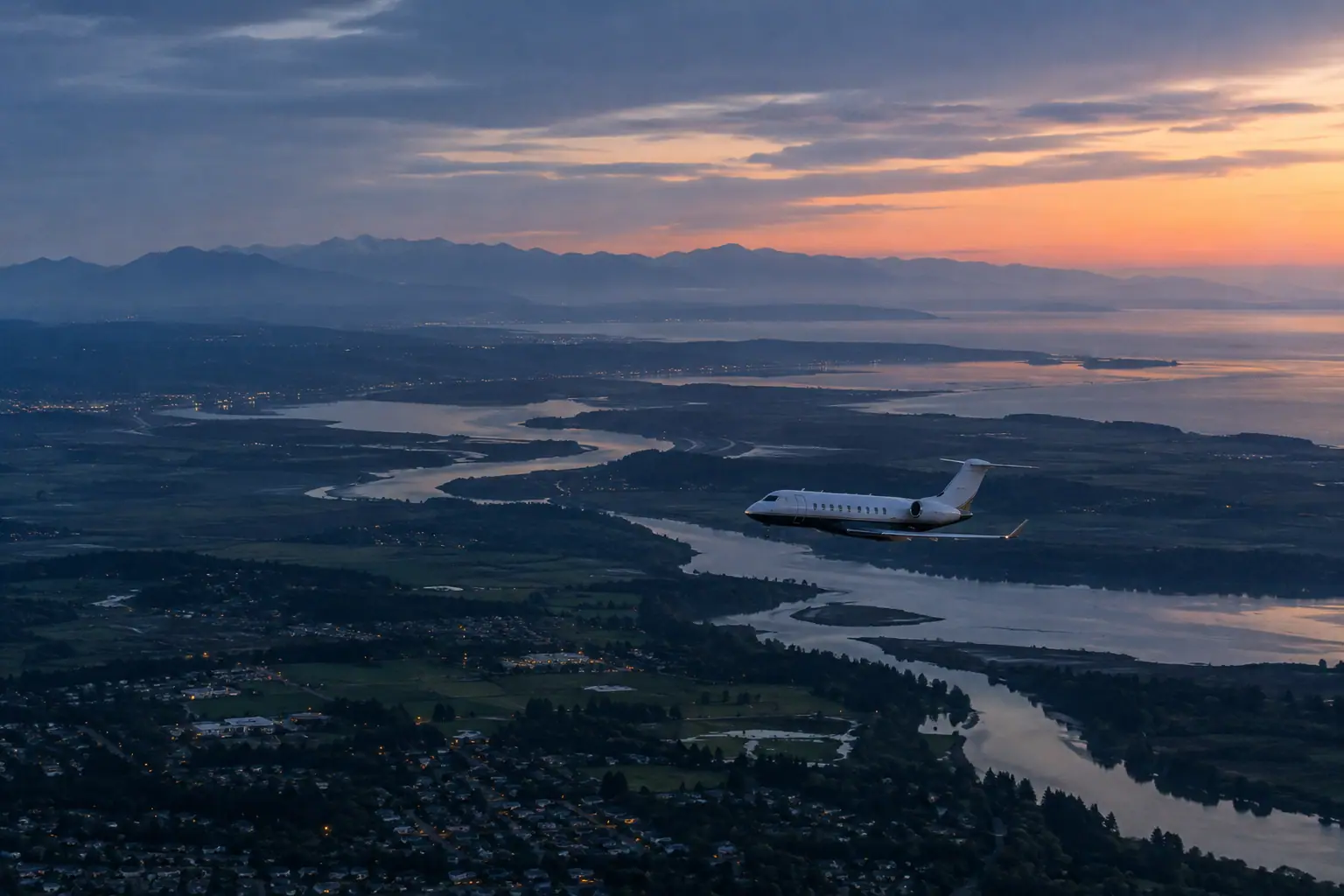
Dassault Falcon 900LX
- 12 seats
- 459 kt cruise
- 4,750 nm reach
The Dassault Falcon 900LX seats twelve at 459 knots with a 4,750 nautical mile range. The longest cabin in this fleet at 33 feet 2 inches pairs with 127 cubic feet of baggage for extended trips. It handles ocean crossings and multi-stop itineraries with ease.
Gulfstream G450
- 14 seats
- 476 kt cruise
- 4,350 nm reach
Choosing a one way private jet by
Start with distance and passenger count, because those two numbers eliminate most of the fleet immediately. A 949 nautical mile leg from New York to Miami fits a light jet at $10,000 to $15,000, while the same route in a heavy jet costs more without adding much time. If your group is four people with carry-on bags, the smaller cabin is usually the sensible buy.
Then check the airports at both ends. Van Nuys lists a July density altitude of 3,200 feet and a peak of 3,800 feet at 115F, which can affect which aircraft depart comfortably on a hot afternoon. Runway length matters too: a 6,004 foot strip at Orlando Executive rules out some heavy jets that need more. When the destination is a small field, a turboprop or light jet often saves a ground transfer. Our brokers confirm performance figures with the operator before you commit, and flights are flown by FAA Part 135 operators who hold operational control.
Questions
How much does a one way private jet by aircraft cost?
Hourly rates range from $2,200 to $3,500 for turboprops, $3,800 to $5,800 for light jets, $5,200 to $7,800 for midsize, $7,200 to $10,000 for super-midsize and $9,500 to $14,500 for heavy jets. A one way quote multiplies the flight time by the hourly rate plus fees. For example, a light jet on New York to Miami, 949 nautical miles, is estimated at $10,000 to $15,000.
Which aircraft are available for a one way private jet by aircraft booking?
The fleet spans ten models from the Beechcraft King Air 350i turboprop to the Dassault Falcon 900LX heavy jet. Passenger counts run from five in the HondaJet Elite II to twelve in the Challenger 650 and Falcon 900LX. Cruise speeds range from 290 to 527 knots, and ranges from 1,550 to 4,750 nautical miles. Availability on your date depends on positioning, which we check when quoting.
Can a light jet fly New York to Los Angeles one way?
Yes, but with limits. New York to Los Angeles is 2,129 nautical miles and a light jet flight time is about 6 hours 15 minutes, estimated at $23,500 to $36,000. The Citation CJ4 Gen2 has a 2,165 nautical mile range, which leaves little margin, so a super-midsize like the Gulfstream G280 at 3,600 nautical miles is the more comfortable choice for that leg.
What is the difference between a turboprop and a light jet?
Turboprops cruise near 300 knots at $2,200 to $3,500 per hour, while light jets cruise around 430 knots at $3,800 to $5,800. The King Air 350i covers 1,800 nautical miles, similar to the HondaJet Elite II at 1,550. The jet saves time on longer legs; the turboprop often reaches shorter runways and costs less per hour. For a 199 nautical mile Los Angeles to Las Vegas hop, a light jet at $4,000 to $6,000 is often the pick.
How do density altitude and runway length affect aircraft choice?
High elevation and heat thin the air, which lengthens takeoff rolls and slows climbs. Centennial Airport sits at 5,885 feet with a July density altitude of 9,000 feet, so performance calculations matter there. Van Nuys peaks at 3,800 feet density altitude at 115F. Operators confirm the figures for your departure time, and we pass those limits into the aircraft recommendation.
Who operates the flights and who arranges them?
Flights are flown by FAA Part 135 operators who hold operational control, including crew, maintenance and dispatch. We act as a charter broker under DOT Part 295, arranging the trip and quoting operators on your behalf. For international legs such as Miami to Nassau, 161 nautical miles, the operator files the manifest and CBP handles clearance. We do not own aircraft and do not operate flights.