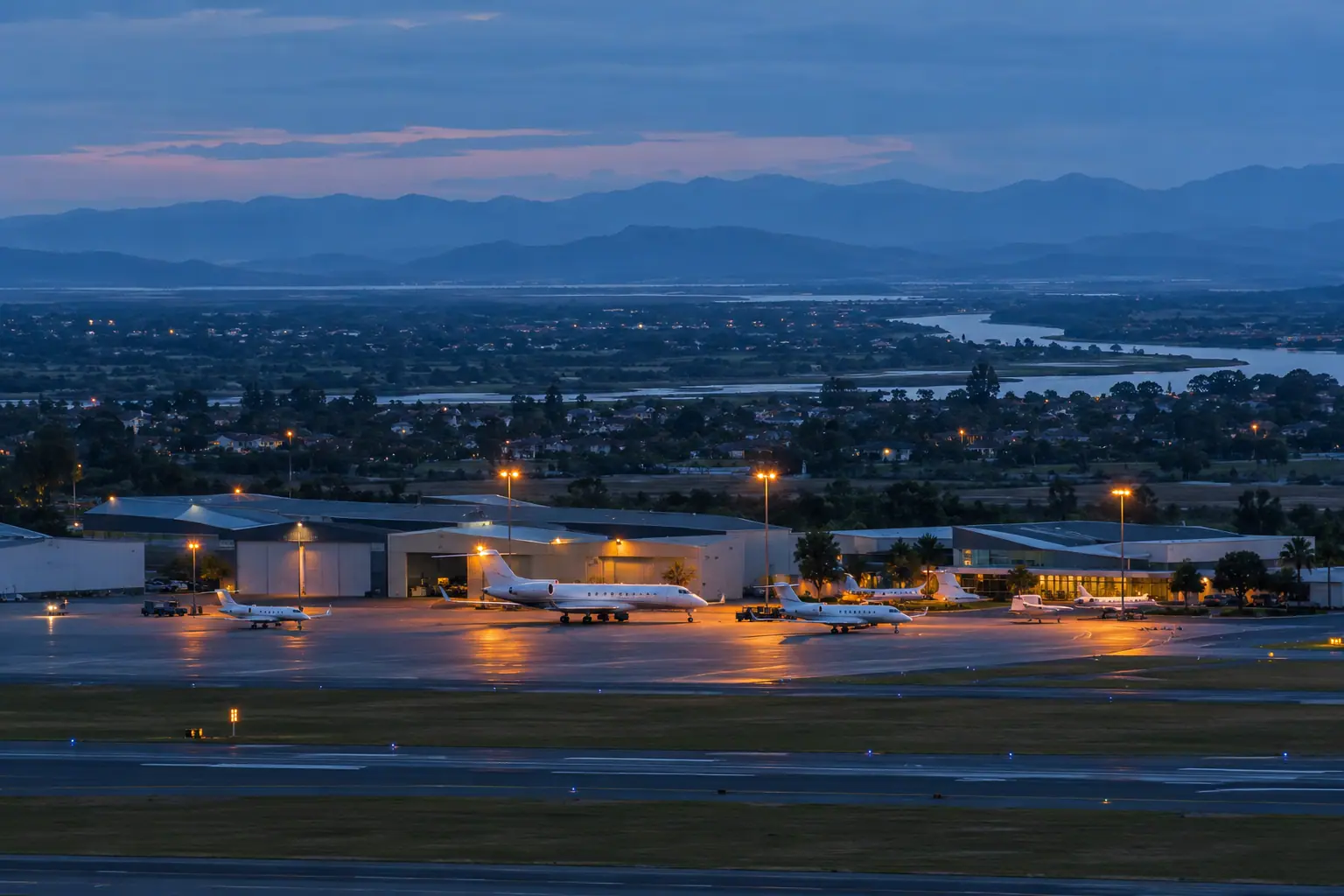
One way private jet Dallas Love Field
A one way private jet Dallas Love Field request starts with a single leg. The field sits at 487 feet elevation with an 8,800-foot runway. This guide covers FBOs, seasonal density altitude and how one-way estimates are built.
A one way private jet Dallas Love Field departure starts with the airport itself. Love Field sits close to downtown Dallas, which makes it a practical alternative to the larger DFW complex for charter customers heading to the Park Cities, Uptown or the Design District. The field's 8,800-foot longest runway handles most midsize and super-midsize jets comfortably in cooler months. Operators file under FAA Part 135 rules, and each flight is flown by a certificated operator that holds operational control. We arrange the trip as your agent under DOT Part 295 authority, which means we quote, compare and book rather than fly the aircraft ourselves.
Single-leg pricing works differently from round-trip charter. When you book a one-way flight, you are typically paying for the repositioning the operator must do to return the jet to its base or move it toward its next booking. Some routes carry a lower repositioning burden than others, and that difference shows up in the quote. A one-way jet charter from Dallas Love Field can cost less than half a round trip on the right route. Ask for the estimate in writing, since charter prices are estimates until the operator confirms aircraft and crew.
Timing matters more than most travelers expect. Love Field is a busy commercial field, so slot and ramp coordination at peak hours can shape your departure window. Booking a private jet charter service with a firm departure time keeps the day predictable. If your schedule is flexible, mid-week mornings often open up more aircraft choices than Friday afternoons. The same logic applies to arrivals: a one-way flight into a congested field like Teterboro or Van Nuys benefits from early planning.
Runway length and field elevation
Dallas Love Field sits at 487 feet above sea level, and its longest runway measures 8,800 feet, which is ample for the jets most charter customers book on this field. That runway length supports midsize and super-midsize aircraft on most domestic routes from Dallas Love Field. Pilots still calculate takeoff distance against the day's actual temperature and weight, because a warm afternoon changes the numbers. Short-field turboprops also use the field, and the mix of traffic is one reason ground movement can feel busier than at a dedicated relief airport.
| Runway | Len | Wid | Surface |
|---|---|---|---|
| 13R/31L | 8,800 ft | 150 ft | Concrete |
| 13L/31R | 7,752 ft | 150 ft | Concrete |
FBOs and ground handling at DAL
Four ground handlers serve general aviation at Love Field: Atlantic Aviation, Jet Aviation, Signature Aviation at Terminal 1 at A2, and Jet Access Dallas. Each FBO on the field offers a different ramp layout and lobby experience for your Dallas departure. Your operator chooses the handler based on fuel contracts and hangar space, so the FBO is usually confirmed with your trip sheet rather than at booking. Ask which one is assigned before you arrange a car, since the entrances differ.
Ground time is short at a field this close to downtown. If you are flying internationally, remember that CBP clearance is arranged separately and is not available at every FBO, so mention the passport leg when you request the quote. For domestic legs, a car can reach downtown Dallas from the FBO in a short drive. Confirm the meeting point with your handler the day before.
Who books one-way charters
- Travelers flying a single leg to Teterboro, Van Nuys or Opa Locka who do not want to pay for a return they will not use
- Business travelers heading downtown Dallas who value a field closer to the city than DFW
- Groups moving equipment or a small team on a schedule that commercial airlines cannot match
- Passengers positioning to catch an international departure or a connecting charter elsewhere
| Class | Usual runway req | Here |
|---|---|---|
| Turboprop | 3,300 ft+ | Accepted |
| Light jet | 4,000 ft+ | Accepted |
| Midsize jet | 5,000 ft+ | Accepted |
| Super-midsize jet | 5,200 ft+ | Accepted |
| Heavy jet | 5,600 ft+ | Accepted |
Density altitude by season at Love Field
Summer is the season that changes performance numbers at Love Field. July and August highs reach 95F, pushing density altitude to about 3,000 feet, and the peak figure at 115F climbs to 3,500 feet. Warm-weather departures from Dallas Love Field can reduce payload or require a longer takeoff roll. Pilots plan fuel and baggage against those figures, and on the hottest afternoons a heavy long-range jet may need a fuel stop or a weight adjustment.
Winter and spring are kinder. January density altitude sits near 400 feet with highs around 56F, and even April stays near 1,700 feet. Wet days cluster in spring, with May seeing about 14 wet days, so build a little slack into a spring departure. If your trip falls in a rainy Dallas week, then an earlier departure window gives the crew more room to work around storms. The numbers above are planning guides, not guarantees; the crew's calculation on the day governs.
| Month | Avg high | Wet days | Density altitude |
|---|---|---|---|
| Jan | 56°F | 7 | 400 ft |
| Feb | 60°F | 9 | 700 ft |
| Mar | 69°F | 10 | 1,300 ft |
| Apr | 75°F | 11 | 1,700 ft |
| May | 83°F | 14 | 2,200 ft |
| Jun | 90°F | 11 | 2,700 ft |
| Jul | 95°F | 8 | 3,000 ft |
| Aug | 95°F | 9 | 3,000 ft |
| Sep | 89°F | 8 | 2,600 ft |
| Oct | 79°F | 7 | 1,900 ft |
| Nov | 67°F | 8 | 1,100 ft |
| Dec | 60°F | 8 | 700 ft |
Getting to and from the airport
Love Field sits roughly 1,066 miles from the Van Nuys reference point used for westbound planning, and its position inside the city makes ground access simple. A short drive connects the FBOs at Dallas Love Field to Uptown, downtown and the Park Cities. Ride shares and sedans both work; confirm which FBO entrance your driver should use, because the general aviation side is separate from the commercial terminal. If you are continuing to another charter, allow time for the ramp transfer rather than treating it as a walk.
Private jet routes via Dallas Love
These 6 private jet routes span 199 to 2,129 nautical miles, with one-way light jet estimates from $4,000 to $36,000.


Questions about this airport
How much does a one way private jet Dallas Love Field flight cost?
No fixed price exists, because the estimate depends on aircraft category, distance and repositioning. A light jet on a short regional leg and a super-midsize jet to the East Coast land in very different ranges. Every figure we give is an estimate until an operator confirms a specific tail and crew, so ask for it in writing and compare it with a round-trip number before you decide.
Which FBOs serve private jets at Dallas Love Field?
Four handlers work the general aviation side: Atlantic Aviation, Jet Aviation, Signature Aviation at Terminal 1 at A2, and Jet Access Dallas. Your operator assigns one based on fuel and hangar arrangements, so the FBO is confirmed with your trip sheet. Ask before you book a car, since entrances and addresses differ and the general aviation area is separate from the main terminal.
What is the longest runway at Love Field?
The longest runway measures 8,800 feet, and the field elevation is 487 feet. That combination works well for the midsize and super-midsize jets most charter customers book here. On hot afternoons the crew recalculates takeoff distance against temperature and weight, and a heavy long-range jet may see a payload limit or a fuel stop on the warmest days.
How does summer heat affect departures from DAL?
July and August highs reach 95F and density altitude runs about 3,000 feet, rising to roughly 3,500 feet at 115F. That thinner air lengthens takeoff rolls and can trim payload. Crews plan around it, and on the hottest afternoons a long-range aircraft may need a fuel stop or a weight adjustment. Winter is much easier, with January density altitude near 400 feet.
Can I book a one-way charter without paying for the return?
Yes. One-way charters are standard, and you pay for the leg you fly plus any repositioning the operator needs to move the jet afterward. Some routes carry lighter repositioning than others, which is why the same aircraft can quote very differently in each direction. Ask us to show the estimate both ways so you can see what the return would add.
Who is responsible for the flight itself?
The flight is flown by an operator holding FAA Part 135 authority, and that operator holds operational control, including crew, maintenance and dispatch. We act as a charter broker and agent under DOT Part 295, arranging and comparing quotes rather than flying the aircraft. For international legs, CBP clearance is arranged with the operator, so mention passports when you request the estimate.