One way jet charter Tampa departures
A one way jet charter Tampa trip usually begins at Tampa International Airport. The field sits 26 feet above sea level with an 11,002 foot main runway. This page covers FBOs, seasonal heat and how single leg pricing works.
A one way jet charter Tampa request almost always routes through Tampa International Airport, which carries the codes KTPA and TPA and sits just 26 feet above sea level. The 11,002 foot primary runway at TPA handles everything from light jets to large cabin aircraft without the weight and heat limits you find at shorter fields. Because so much capacity sits on one field, single leg quotes out of Tampa tend to be competitive when you give us a firm date and a passenger count.
Here is the difference between this and a round trip booking. On a one way private jet flight, you pay for the leg you actually fly plus the cost of moving the aircraft to your departure point and back to its base. On a round trip, that repositioning is spread across both directions, so the per leg number looks lower. Many passengers flying out of Tampa on a one way private jet compare the single leg quote against a round trip and find the gap is smaller than expected on busy routes. One way jet charter Tampa pricing reflects repositioning, crew duty limits and fuel, not a flat per mile rate, so two flights of the same distance can price differently depending on where the aircraft sleeps.
We act as your broker, not your operator. The company arranging your trip works as an agent under DOT Part 295 rules, while the flight itself is flown by an operator holding FAA Part 135 authority who keeps operational control from departure to arrival. That split matters when weather or maintenance changes the plan: the operator makes the go or no go call, and we handle the rebooking, the alternate airports and the paperwork so your day still works. Every aircraft we quote for a Tampa departure is vetted for certification, insurance and crew currency before it reaches your inbox.
Runways and field notes at TPA
The longest runway at Tampa International measures 11,002 feet, and with field elevation at 26 feet there is plenty of margin for a fully fueled midsize or large cabin jet on a hot afternoon. A field this flat and this long means few payload restrictions on Florida departures, which is why Tampa handles long nonstop legs to the West Coast and to Teterboro without a fuel stop. Crosswind components and afternoon thunderstorm cells are the more common reasons a departure slot shifts, not runway length. If your itinerary includes a short field at the other end, we check that runway before we quote rather than after.
| Runway | Len | Wid | Surface |
|---|---|---|---|
| 19R/01L | 11,002 ft | 150 ft | Concrete |
| 19L/01R | 8,300 ft | 150 ft | PEM |
| 10/28 | 6,999 ft | 150 ft | PEM |
Ground handling at Tampa International
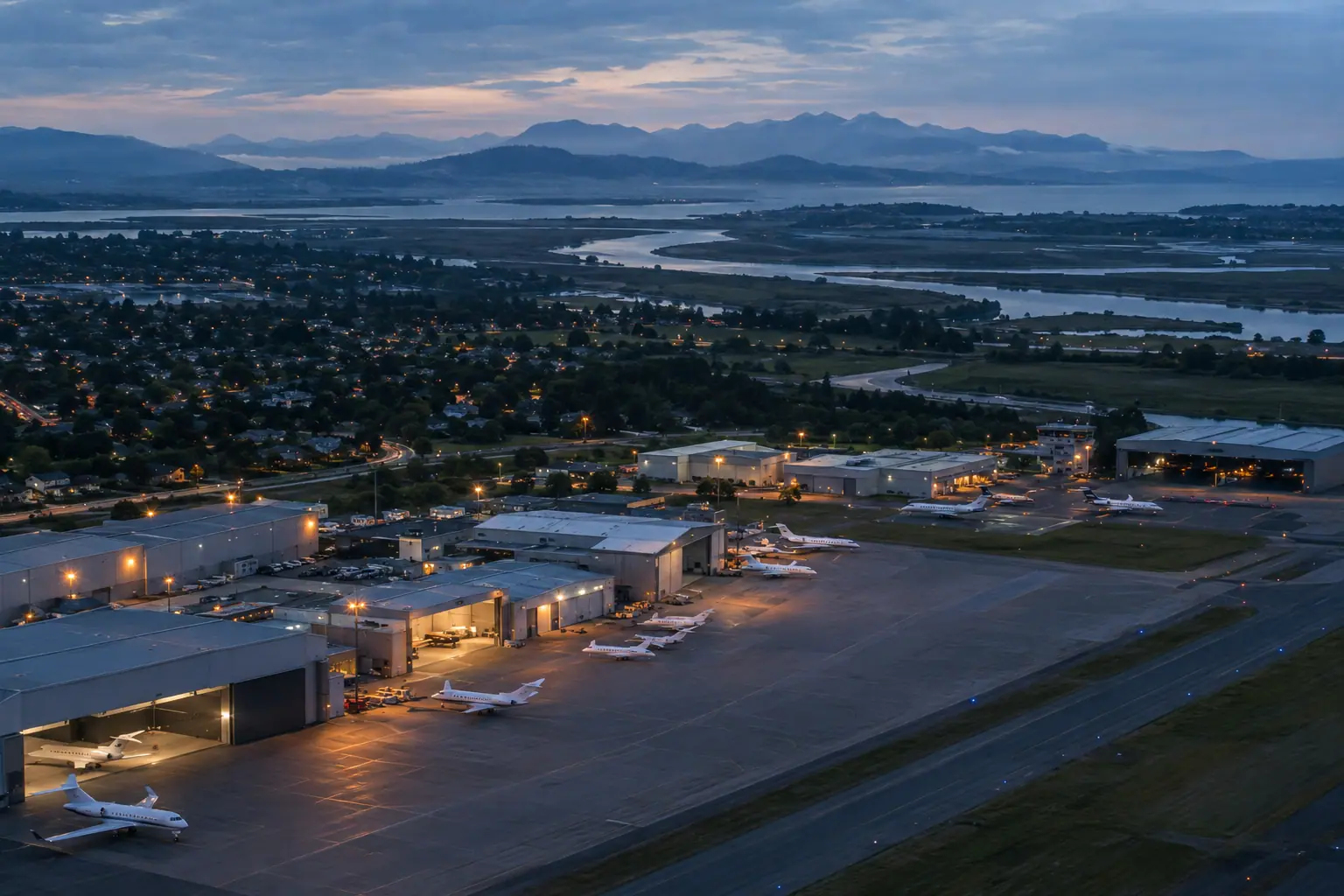
Two fixed base operators serve general aviation at Tampa International: Sheltair and Signature Aviation. Both handle jet arrivals and departures, arrange fuel, and provide a lounge for passengers meeting a crew. Choosing between Sheltair and Signature at TPA often comes down to hangar space and ramp proximity on your travel date, so we confirm availability before we lock a quote.
Ground time matters on a one way trip because the aircraft is not waiting for you afterward. When your party arrives by car or rideshare, plan for a short ramp transfer and have identification ready for everyone on the manifest. For international legs, CBP clearance is arranged in advance and the FBO will tell you where to meet the officer.
Trips this airport suits best
- Single leg departures to the Northeast, including Teterboro at 2,227 miles
- West Coast nonstops that need the full 11,002 foot runway on a hot day
- Tampa Bay business travelers flying one direction and returning commercially
- Winter visitors heading home after a stay on the Gulf coast
| Class | Usual runway req | Here |
|---|---|---|
| Turboprop | 3,300 ft+ | Accepted |
| Light jet | 4,000 ft+ | Accepted |
| Midsize jet | 5,000 ft+ | Accepted |
| Super-midsize jet | 5,200 ft+ | Accepted |
| Heavy jet | 5,600 ft+ | Accepted |
Heat and density altitude by season
Tampa's summer heat pushes density altitude to roughly 2,000 feet in July and about 2,600 feet at the 115F peak, which is a modest penalty for a field with this much runway. Density altitude near 2,000 feet at TPA is well within limits for most jets, but it still affects takeoff distance and climb performance, and a prudent crew plans for it. The wet season runs from June through September, when Tampa sees 21 to 25 wet days a month and afternoon storms build quickly.
Winter is the easier season operationally, with January highs near 70F, seven wet days and density altitude around 800 feet. If your trip falls in summer, build slack into the schedule for a storm cell that parks over the bay. When a line of weather sits on the field, the operator may hold departure or file an alternate routing, and we keep you informed as that decision develops.
| Month | Avg high | Wet days | Density altitude |
|---|---|---|---|
| Jan | 70°F | 7 | 800 ft |
| Feb | 74°F | 8 | 1,000 ft |
| Mar | 80°F | 8 | 1,400 ft |
| Apr | 83°F | 9 | 1,600 ft |
| May | 88°F | 11 | 2,000 ft |
| Jun | 88°F | 21 | 2,000 ft |
| Jul | 89°F | 24 | 2,000 ft |
| Aug | 89°F | 25 | 2,000 ft |
| Sep | 86°F | 21 | 1,800 ft |
| Oct | 83°F | 8 | 1,600 ft |
| Nov | 77°F | 7 | 1,200 ft |
| Dec | 72°F | 6 | 900 ft |
Getting to the airport and onward
Tampa International sits close to downtown Tampa and the Gulf beaches, with the main terminals and the general aviation side reached by the same highway network. Passengers on a private flight use the FBO entrance rather than the main terminal, which keeps the departure process short. If you are driving in from St. Petersburg or Clearwater, allow extra time for the Howard Frankland or Courtney Campbell causeways during rush hour. We send the FBO address and a contact number with your final itinerary.
Private jet routes via Tampa
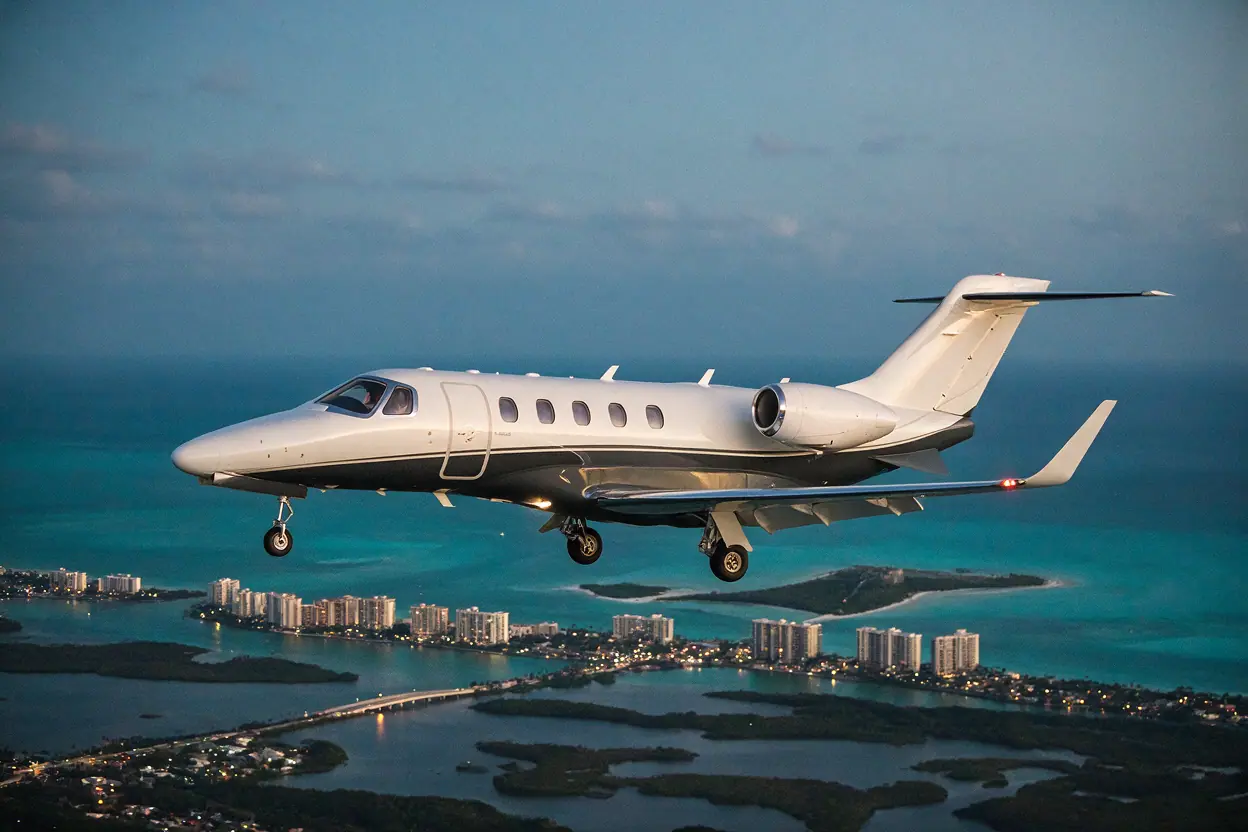
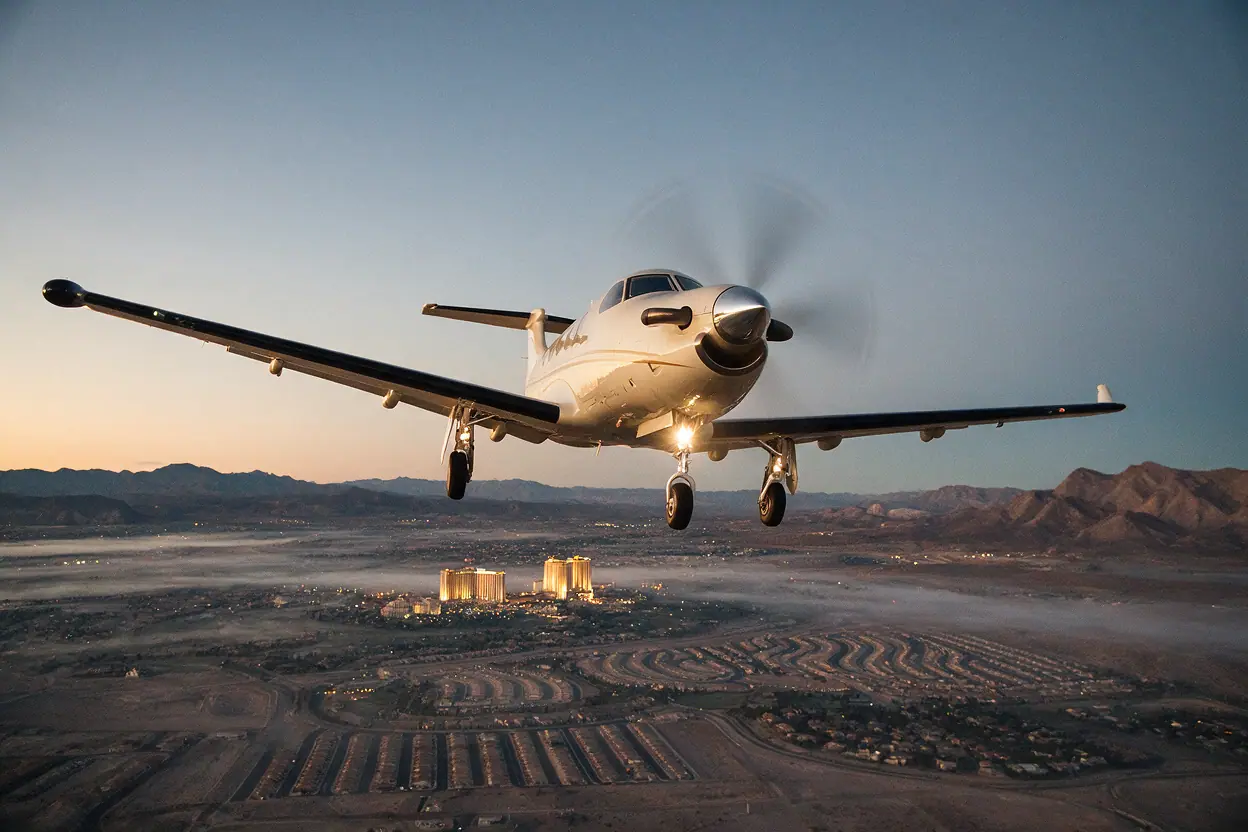
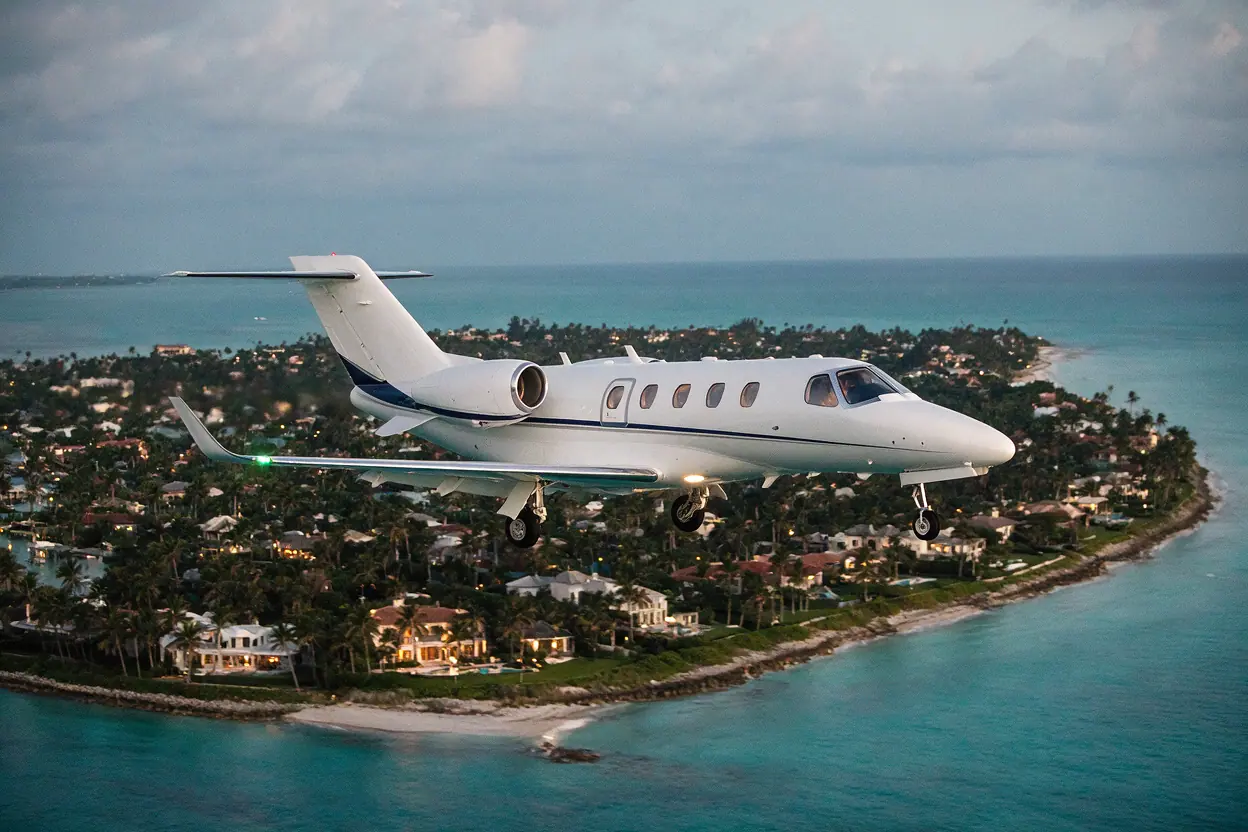
These 6 private jet routes span 199 to 2,129 nautical miles, with one-way light jet estimates from $4,000 to $36,000.



Questions about this airport
How does one way jet charter Tampa pricing work?
You pay for the leg you fly plus repositioning, so a one way jet charter Tampa quote is not simply half a round trip. On a 2,227 mile run to Teterboro, the aircraft may need to return to its base empty, and that cost is built in. We show the estimate clearly and flag where it could move.
Which airport serves Tampa for private jets?
Tampa International Airport, coded KTPA and TPA, is the main field, with field elevation of 26 feet and a longest runway of 11,002 feet. Sheltair and Signature Aviation both handle general aviation there. Smaller nearby fields exist, but TPA carries the runway length for long nonstops.
Can I fly nonstop from Tampa to the West Coast?
Yes, in the right aircraft. The 11,002 foot runway and low field elevation give good takeoff margins, though summer density altitude near 2,000 feet still factors into the performance calculation. We match the aircraft type to the distance and the passenger count rather than assuming one size fits all.
What is density altitude and why does it matter at TPA?
Density altitude is the altitude the aircraft feels given heat and humidity. At Tampa it reaches about 2,000 feet in July and roughly 2,600 feet at the 115F peak, which reduces lift and lengthens takeoff rolls. Crews plan around it, and the long runway keeps the penalty manageable.
When is the quietest season to depart Tampa?
December through February is the driest stretch, with six to eight wet days a month and January highs near 70F. Summer brings 21 to 25 wet days a month and afternoon storms. If your dates are flexible, winter departures face fewer weather delays on the field.
Who is responsible for the flight itself?
The operator holding FAA Part 135 authority keeps operational control and answers for the flight. We arrange the trip as your agent under DOT Part 295 rules and are not the operator. For international legs, CBP handles clearance, and the FBO coordinates the timing with you.